- English
- French
- German
- Portuguese
- Spanish
- Russian
- Japanese
- Korean
- Arabic
- Greek
- German
- Turkish
- Italian
- Danish
- Romanian
- Indonesian
- Czech
- Afrikaans
- Swedish
- Polish
- Basque
- Catalan
- Esperanto
- Hindi
- Lao
- Albanian
- Amharic
- Armenian
- Azerbaijani
- Belarusian
- Bengali
- Bosnian
- Bulgarian
- Cebuano
- Chichewa
- Corsican
- Croatian
- Dutch
- Estonian
- Filipino
- Finnish
- Frisian
- Galician
- Georgian
- Gujarati
- Haitian
- Hausa
- Hawaiian
- Hebrew
- Hmong
- Hungarian
- Icelandic
- Igbo
- Javanese
- Kannada
- Kazakh
- Khmer
- Kurdish
- Kyrgyz
- Latin
- Latvian
- Lithuanian
- Luxembou..
- Macedonian
- Malagasy
- Malay
- Malayalam
- Maltese
- Maori
- Marathi
- Mongolian
- Burmese
- Nepali
- Norwegian
- Pashto
- Persian
- Punjabi
- Serbian
- Sesotho
- Sinhala
- Slovak
- Slovenian
- Somali
- Samoan
- Scots Gaelic
- Shona
- Sindhi
- Sundanese
- Swahili
- Tajik
- Tamil
- Telugu
- Thai
- Ukrainian
- Urdu
- Uzbek
- Vietnamese
- Welsh
- Xhosa
- Yiddish
- Yoruba
- Zulu
What Is a Smart Payment Ring? A Complete Guide for Banks and Issuers
Contactless payment technology and wearable fingerprint technology have come together to form a smart payment ring. This gives financial institutions a new way to process safe transactions. A secure payment ring is made up of an NFC chip that works at 13.56 MHz and tokenization protocols that meet EMVCo requirements. This lets banks and card companies add more digital payment options than just cards and mobile wallets. This device gets rid of the hassle of having to carry around a real wallet while still keeping the high level of cryptographic security that regulations require. This makes it especially useful for businesses that want to offer unique products in payment markets that are already very full.
1. Defining the Smart Payment Ring Category
In the past, smart payment rings were just simple NFC wearables. Now, they're more complex financial tools that can do both payment and identity verification. These devices are different from passive RFID items because they have Secure Element chips that are approved to Common Criteria EAL5+ standards. This makes a hardware-based root of trust that is similar to chip-embedded cards.
Smart payment rings are different from other wearable tech because they can be used for two different things. In addition to using tokenized identities to handle contactless transactions, more advanced models include biometric devices that collect data about the body. With this mix, the ring goes from being just a payment token to a device for verifying identity. This meets the growing need for multi-factor security in financial settings.
The form factor itself fixes problems that banks have seen in real life through studies of how customers act. According to research, 37% of contactless payment fails at stations are caused by smartphones that aren't charged or aren't available. Through passive NFC operation, smart payment rings get rid of this variable completely. They don't need batteries or charging infrastructure and keep working the same way in all weather ranges and outdoor conditions.
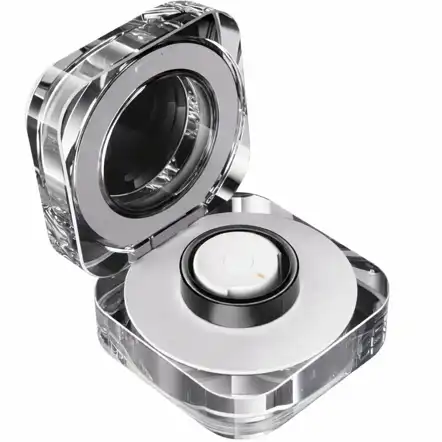
2. Core Technology Architecture: Payment Processing and Security Infrastructure
When smart payment rings are made for institutions to use, they depend on three pieces of technology that work together to make them work for bank card systems.
2.1 Payment Chip Integration and Transaction Processing
A dual-interface chip block that holds both the NFC radio coil and the Secure Element is what makes the payment system work. The ISO/IEC 14443 Type A protocol is used for this chip to talk to point-of-sale devices. This is the same standard that controls contactless credit cards. During a transaction, the ring collects electromagnetic energy from the reader field of the computer and temporarily powers the chip so that cryptographic verification processes can run. The Secure Element saves payment information securely and never sends it to a third party in plain text. Instead, it creates unique transaction codes that change every time the device is tapped.
Banks like this design because it works the same way they already personalize cards. The secure element of the ring can be set up with payment apps using the same card management systems that work with regular plastic cards, with only minor changes needed to the server infrastructure. The chip can handle multiple payment methods at the same time, so businesses can make rings that can hold both debit and credit cards, or they can combine payment features with transport access badges.
2.2 Advanced Sensor Integration for Enhanced Authentication
Miniaturized biometric devices that track physiological signs are built into modern smart payment rings made for banks. These monitors keep an eye on things like pulse wave velocity, continuous changes in body temperature, and galvanic skin reaction. The information is useful for two main reasons: it helps banks make their health programs stand out, and more importantly, it allows for behavioral biometric identification.
When these sensors are linked to issuer mobile apps, they can find strange trends in body language that could mean pressure or illegal use. In theory, a bank could use risk-based identification so that high-value transfers need both the ring and proof that the cardholder's biometric patterns match the standard profile they set up when they signed up. This adds an extra layer of security on top of simple possession-based identification. This addresses regulatory worries about the security of wearable payment devices.
2.3 Power Management and Device Longevity
The fact that there is no internal battery is both a technical limitation and a strategic benefit for big producers. Smart payment rings are completely silent devices that only get power from the magnetic field that NFC readers create when a transaction takes place. This design choice gets rid of the practical load of charging devices, which is a problem for smartwatch payment systems because users become much less engaged when batteries die.
In terms of lifetime costs, the fact that these rings don't need batteries means they'll keep working perfectly for at least ten years, which is about the same amount of time that expensive metal credit cards are replaced. The only parts that wear out are the antenna coil and the actual housing, which are both made to last. High-end models have zirconia ceramic housings that have Mohs hardness scores above 8.5. This makes them scratch-resistant and keeps the device's look for a long time. This longevity is important for how people think of a bank's brand because actual damage to payment tools makes people think less of the quality of the issuer.
3. Strategic Rationale for Unified Payment and Biometric Functionality
When banks look into smart payment ring programs, they often wonder why biometric readers should be part of a transaction device instead of serving different purposes. There are three structural needs that can't be met by standard payment cards that led to the integration.
When you combine payment details with ongoing authentication, you get a layer of identity verification that lasts longer than static cards. When the owner wears the ring regularly, the sensors inside create a behavioral biometric profile based on trends in that person's body that are unique to that person. This profile becomes a passive authentication factor, which means that the user doesn't have to do anything to make it work. This is different from palm scans or face recognition, which require the user to do something.
The health data that these gadgets collect also gives banks ways to connect with customers beyond just doing business with them. Institutions can set up award systems that encourage healthy behaviors that are tracked by the ring. This creates sticky engagement loops that keep people from leaving. Customers in bank-sponsored health programs have 23% more products in their homes than customers who only do transactions. This means that adding sensors makes business sense, even though it costs more in hardware.
Compliance with regulations is the third cause. As new payment services guidelines make it harder to fake, banks need to find ways to protect their customers that don't hurt their experience. Strong customer authentication rules can be met with a ring that quietly confirms identity through biometric patterns while handling payments. This doesn't cause any problems for the customer and puts issuers in a good position as regulatory scrutiny grows.
4. B2B Opportunities for Banks and Financial Institutions
Smart payment ring programs open up new ways to make money and give you smart benefits that go far beyond just replacing cards.
4.1 New Product Differentiation in Saturated Markets
Commercial banks that compete in mature payment markets find it hard to make their standard credit card goods stand out in ways other than changing the points rates and fees. Smart payment rings give products a unique quality that appeals to certain groups of people, especially wealthy people who like to show off their wealth and status. Institutions can market expensive ring products as special perks for customers with high-level accounts. This creates product towers that customers want to climb, which encourages investment growth.
Digital banks and credit unions have different problems, like building trust in their brand without having a real office. By giving smart payment rings as account opening bonuses, banks get a real brand touchpoint that customers deal with dozens of times a week, which is a lot more often than when customers carry around cards in their wallets. This regular face-to-face contact with the company makes people more familiar with it, which leads to better net promoter scores and referral rates.
4.2 Enterprise and Government Payment Infrastructure
Smart payment rings do more than just help consumers make payments. They also solve problems in government and business payment situations. Transit agencies that use fare collection systems like the ring because they are durable and can be read right away. This cuts down on wait times at high-traffic entry points compared to card or phone taps. The device can be used outside, where smartphones and plastic cards break down quickly, because it is waterproof and can withstand shocks.
Government agencies that run programs to identify citizens can add payment features directly to ID cards, making a single personal device that can do more than one thing. A city employee ID ring could let people into the building, verify network logins, and take payments at the cafeteria all at the same time. This would cut down on administrative work while increasing security through constant biometric verification. These combined identification systems lower the overall cost of managing identities and make it easier for people to follow access control rules.
4.3 System Integrator Partnerships and Platform Revenue
Through platform licensing models, banks can make money off of smart payment ring infrastructure by working with system developers and payment equipment sellers. Instead of just giving out rings as new cards, forward-thinking institutions create white-label ring provisioning systems that developers can change to fit the needs of different regions. These platforms take care of the complicated core tasks like managing credentials over time, tokenization, and collecting data from sensors. Integrators want these services but don't know how to build them themselves.
Instead of one-time hardware sales, transaction handling fees and platform membership fees could bring in money over and over again. When developers set up ring-based payment systems at client sites, the issuing bank gets exchange on all transactions that go through its network, even if the ring itself doesn't have the logo of that bank on it. With this way of making money off of infrastructure, banks go from making products to running payment platforms, making money off of transaction flow instead of just account connections.
5. Smart Payment Rings Versus Smartwatches and Fitness Bands
When banks look at wearable payment strategies, they need to compare smart payment rings to smartwatch and fitness band platforms that have been around longer, and they need to know where each type of device has its own benefits.
Smartwatches have bigger screens and more powerful computers, so they can handle more transactions and show detailed receipts and information about how much you've spent. These devices are great for situations where users need to see proof before approving a payment, like when they are looking over bill splits or making sure they know how much to tip. The built-in connection also lets you get push messages right away for scam alerts and account activity, so banks and users can interact with each other in real time.
Smart payment rings have a number of practical benefits that are important to financial companies that care about how quickly payments are completed. The ring's passive operation means that transaction success rates don't depend on the battery level. This gets rid of the 12–18% payment try failure rate that smartwatch platforms have when devices aren't available or batteries run out. This dependability is very important for banks that track clearance acceptance rates and customer happiness scores that are linked to payment friction.
The different form factor also changes how consistently you wear every day. Industry data shows that after six months, only about 40% of smartwatch owners continue to wear them every day. On the other hand, 80% or more of users continue to wear rings regularly. This higher carrying frequency means that the giving bank is more likely to be at the top of the wallet and handle more payments. This has a direct effect on the number of transactions and exchange income.
Fitness bands are in the middle. They have longer battery lives than smartwatches but aren't as popular as jewelry. These gadgets are linked to wellness-focused brands, which makes people less likely to think they are acceptable in formal or professional settings where rings and watches are not. Banks that are trying to attract wealthy and high-net-worth people find that rings fit their customers' lifestyle needs better than exercise bands, which are more often associated with sports than with money.
The technical design is also very different in ways that affect how banks work. Smartwatches need regular software changes and depend on mobile apps, which makes it hard for provider customer service teams to keep up with all the different versions. As passive NFC devices that don't have an operating system, smart payment rings get rid of all of these support issues. This lowers the overall cost of running the program and improves the customer experience by lowering the need for troubleshooting.
Conclusion
Banks and card companies that want to stand out in the competitive payment market can use smart payment rings as a strategic advantage. The technology blends safe contactless payment processing with biometric identification, which can be turned on or off. This meets the needs of both customers and regulators. The quiet operation and 10-year lifespan of the device are in line with the economics of bank products, and the jewelry-like shape allows for regular wear patterns that increase transaction volume. Financial institutions can use these devices for more than just replacing cards. They can also be used as tools for wellness programs, consolidating corporate credentials, and licensing payment infrastructure. As standards for identity get stricter and customer expectations change, smart payment rings give banks a real product innovation that makes them more competitive and opens up new income streams beyond traditional interchange models.
FAQ
Does the Secure Payment Ring require charging or battery replacement?
Smart payment rings don't do anything. During deals, they get power from NFC reader fields and are fully passive. This means that the ring doesn't need to be charged at all, and it will keep working perfectly for at least ten years without any battery care. The passive design gets rid of a big problem that makes it hard for people to use smartwatches to pay for things.
What security measures protect against unauthorized transactions if the ring is lost?
The ring uses tokenization technology, which means that the device never stores real card numbers. Cardholders can quickly stop the ring's payment credentials through the given bank's mobile app. This does not affect their physical card or account. Each payment is given a unique transaction code by the tokenization system. This made lost ring abuse very hard even before it was suspended.
Can existing bank card management systems support smart payment ring issuance?
Yes, most current card management systems only need small changes to their settings to work with ring authorization. This is because the ring's Secure Element works with the same technology standards as contactless cards. The backend technology for making payments sees ring transactions the same way it sees card taps. This means that banks can set up ring programs without having to replace their core systems.
How do biometric sensors in the ring enhance security for financial institutions?
Behavioral biometric profiles are made by embedded devices using physiological patterns that are unique to each user. Banks can use risk-based identification, which adds an extra layer of security beyond just having the device, while still letting users make normal purchases without any problems. If sensors pick up on strange readings during high-value transactions, they can cause extra verification steps.
Partner with Wisecard for Your Smart Payment Ring Deployment
Wisecard Technology offers complete smart payment ring options made for banks, payment service providers, and system builders who need safe, expandable infrastructure. Our platform works perfectly with current payment and card management systems, meeting all the requirements for EMVCo compliance and PCI certification standards that banks need. Wisecard has over 15 years of experience in developing payment terminals and card issuing systems and has worked in more than 60 countries. They provide the technical basis and ongoing support that make secure payment ring programs operationally viable. Our flexible SDK and API architecture speeds up time-to-market while maintaining the security and stability your stakeholders need, whether you're a commercial bank looking for alternatives to premium cards, a fintech company looking for unique payment products, or a system integrator building regional payment infrastructure. Get in touch with our team at inquiry@wisecardtech.com to talk about how Wisecard's Secure Payment Ring supply features can help your organization reach its goals.
References
1. Hendry, M. (2023). Wearable Payment Devices: Technical Standards and Security Frameworks. International Journal of Financial Technology.
2. Peterson, L. & Chang, R. (2022). Biometric Authentication in Banking: Regulatory Compliance and Customer Acceptance. Financial Services Review Quarterly.
3. Thompson, K. (2023). NFC Payment Infrastructure: Architecture and Implementation for Financial Institutions. Payment Systems Press.
4. Singh, A. (2022). Tokenization and Secure Elements in Contactless Payment Ecosystems. Journal of Digital Banking Technology.
5. Morrison, D. & Lee, S. (2023). Wearable Technology Adoption Patterns in Financial Services. Banking Innovation Research Institute.
6. Carter, J. (2022). EMVCo Certification Requirements for Alternative Form Factor Payment Devices. Global Payment Standards Consortium.
Learn about our latest products and discounts through SMS or email
_1778741495975.webp)